Indian Theme” Doesn’t Mean “kids’ Game
When many Indians hear “Indian theme board game,” they immediately imagine one of two things:
either a kids’ mythology game… or some overly patriotic, boring “GK quiz” format.
But the new wave of Indian-themed board games is completely different.
These games are not trying to teach you India.
They’re trying to put you inside Indian situations—power, trade, history, ethics, war, and survival—then watch what decisions you make.
And that’s why youth are picking them up. They don’t feel like homework. They feel like:
“Arre… this is kind of real.”
Today I’m going to talk about five Indian-themed games that represent five different moods:
- If your group likes debate and drama
- If your group likes calm, brainy puzzles
- If your group likes fast 2-player duels
- If your group likes deep strategy without shouting
- If your group wants mythological action in under an hour
And the fun part is—these games don’t compete with each other. They fill different gaps.
Your Group’s Personality Decides Your “india Game
Let’s not start with game names.
Let’s start with people.
Because one friend group is like:
“Bro, let’s negotiate. Let’s betray. Let’s form alliances.”
Another group is like:
“Please don’t shout. I want quiet strategy. Give me a system.”
Another group is like:
“Only two of us are free. Give something fast.”
This is exactly why Indian-themed games are becoming interesting—India offers multiple kinds of stories.
So here’s the simple mapping:
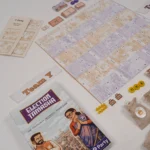
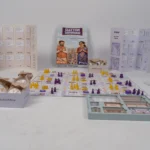
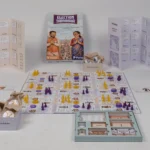
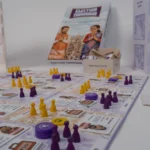
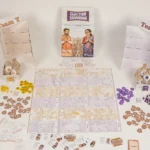
If your group likes argument + persuasion + politics, you’ll naturally gravitate to a political simulation game like Shasn. (SHASN INDIA)
If your group likes building something peacefully but intelligently, you’ll love a civilisation-builder like Indus 2500 BCE. (BoardGameGeek)
If your group wants short, competitive, “just one more round”, you want a tight 2-player market duel like Jaipur. (BoardGameGeek)
If your group wants deep Euro strategy—not too loud, not too random—then Rajas of the Ganges is a strong pick. (BoardGameGeek)
And if your group wants mythology + tactical combat in a fixed time window, games branded around Kurukshetra style battles are filling that niche. (Games for Seva)
Now let’s compare them in a way that actually helps you choose.
The “time” Question—this Is Where Most People Buy Wrong
Indian youth often have interest—but not time.
So the first comparison is not theme.
It’s playtime.
Some games are designed for a 90-minute vibe.
Some are designed for 30–60 minutes.
Some are designed for quick 30-minute duels.
That’s why Jaipur keeps working as a “starter Indian theme” game: it’s strictly 2 players and usually wraps in about 30 minutes, with a clear objective—trade smart, sell at the right time, beat your rival merchant. (BoardGameGeek)
Compare that to a political negotiation game like Shasn. Shasn is designed for 2–5 players, and depending on player count and how discussion-heavy your group is, it can run long—because the “fun” is in persuasion, positioning, ethics, alliances, and consequences. (SHASN INDIA)
So here’s the trade-off:
- If you want fast satisfaction, Jaipur is your friend. (BoardGameGeek)
- If you want full Bollywood politics arc, Shasn is your friend. (SHASN INDIA)
Both are Indian-themed.
But the “India” they show you is totally different.
Loud India Vs Quiet India
Another big difference: noise level.
Some games make the table loud.
Some make it silent.
Shasn is loud India.
It’s ethics + election-style gameplay where you’re building a political identity and trying to win influence and power. This naturally creates table-talk: “Why did you do that?” “I’ll support you if you support me.” “You can’t say that and then take that policy.” (SHASN INDIA)
Indus 2500 BCE is quiet India.
It’s a “build your civilisation” style game using a flip-and-write mechanism, with calamities and planning tension. It supports 1–5 players and plays around 30–60 minutes—so it’s also friendly for modern schedules. (BoardGameGeek)
So again, it’s not “which is better.”
It’s “which version of fun do we want?”
- If you want debate and social drama: Shasn. (SHASN INDIA)
- If you want calm brainy satisfaction: Indus 2500 BCE. (BoardGameGeek)
The “strategy Without Stress” Category
Now let’s talk about a game that many Indian youth end up loving once they cross the beginner phase:
Rajas of the Ganges.
Why? Because it gives you a very “India-themed” setting—Rajas and Ranis building estates in historic India—without turning into a shouting match. (BoardGameGeek)
It’s typically 2–4 players and around 45–75 minutes, and it scratches the strategy itch without requiring you to be a hardcore gamer. (BoardGameGeek)
Its USP is that it rewards people who balance systems well—money, progress, timing—rather than people who are simply aggressive.
So if your group likes:
- “Let’s think, let’s plan, let’s optimise,”
Rajas works.
If your group likes:
- “Let’s negotiate and argue,”
Shasn works.
Different energies.
Mythology—but With Modern Game Feel
Now mythology.
Indian youth don’t reject mythology. They reject childish treatment of mythology.
That’s why games branded around Kurukshetra have traction when they deliver:
- clear objectives
- tactical choices
- time-bound sessions
For example, versions described as strategic deck-building / tactical battles commonly pitch 2–4 players and around ~45–60 minutes, with direct combat goals. (Games for Seva)
This fits a very specific need:
“Give me Mahabharata flavour, but in modern game form.”
And this is important:
mythology games can become repetitive if choices are shallow.
But when they offer real tactical variety, they become a real hobby option rather than a novelty.
How To Pick Your “first Indian-themed Set
So if you’re a youth audience in India and you want to start Indian-themed gaming seriously, here’s the smartest non-linear way to choose:
- If you mostly play two-player with a friend/partner: go Jaipur for fast, repeatable market duels. (BoardGameGeek)
- If your group loves talking, alliances, and power dynamics: go Shasn—but only if you have time and patience. (SHASN INDIA)
- If you want quiet strategy and modern pacing: go Indus 2500 BCE. (BoardGameGeek)
- If you want structured strategy without social conflict: go Rajas of the Ganges. (BoardGameGeek)
- If you want myth + tactics in a clear play window: explore Kurukshetra-style tactical titles. (Games for Seva)
The big takeaway is simple:
Indian-themed board games aren’t one genre.
They’re five different genres wearing Indian clothes—politics, history, trade, civilisation, mythology.
Choose the mood, and you’ll choose the right box.