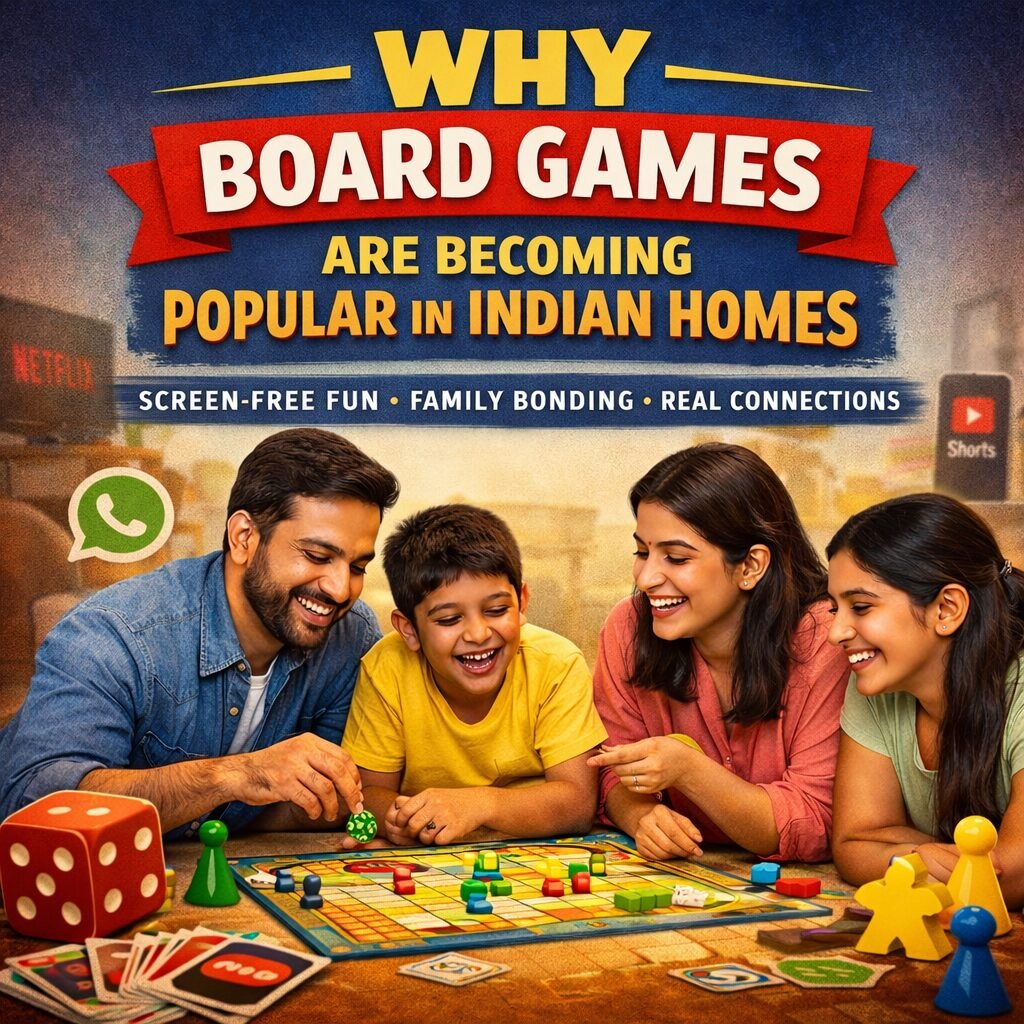
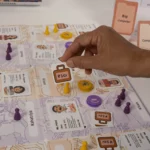
Today, most Indian families don’t argue about what to watch on TV.
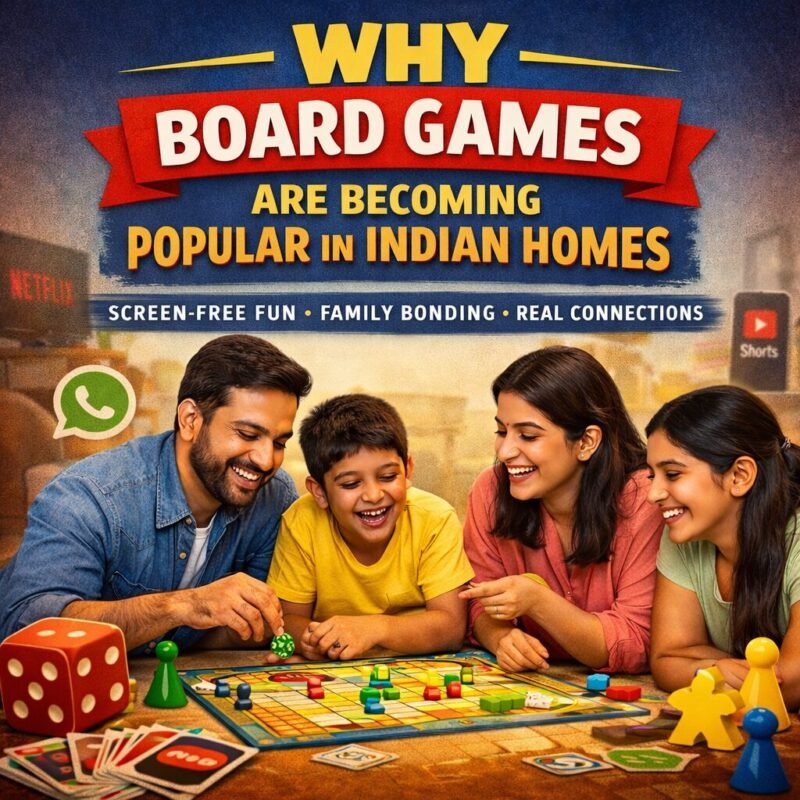
Let’s be honest. Today, most Indian families don’t argue about what to watch on TV. They argue about who is watching what… on which screen.
One person is on Netflix.
One is on YouTube Shorts.
One is scrolling Instagram. And someone is still stuck on WhatsApp forwards. Everyone is at home. Everyone is entertained.
And somehow… no one is together.
And this isn’t just a feeling. Media studies in India show that average screen time in urban homes has crossed six hours per day per person.
That’s not family time. That’s parallel solo time. So the real question is not:
“How do we get better entertainment?” The real question is:
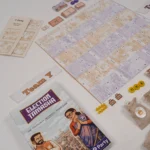
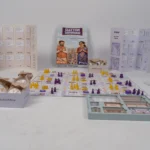
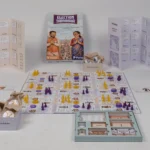
“What still brings people together in the same room?” And interestingly, one old answer is quietly returning —board games.
Why Indoor Play Is Making a Comeback
Let’s look at how Indian life has changed. Earlier, kids played outside till sunset. Today, parents ask:
“Lift mein kaun kaun hai?”
“Guard hai na?”
“Helmet pehna hai?”
Add to that:
- Smaller apartments
- Fewer playgrounds
- Extreme heat
- Pollution
- Traffic
Outdoor play now needs planning, permission, and patience. And adult play? Forget it. After work, nobody wants to:
- Travel to a turf
- Carry equipment
- Sweat for one hour
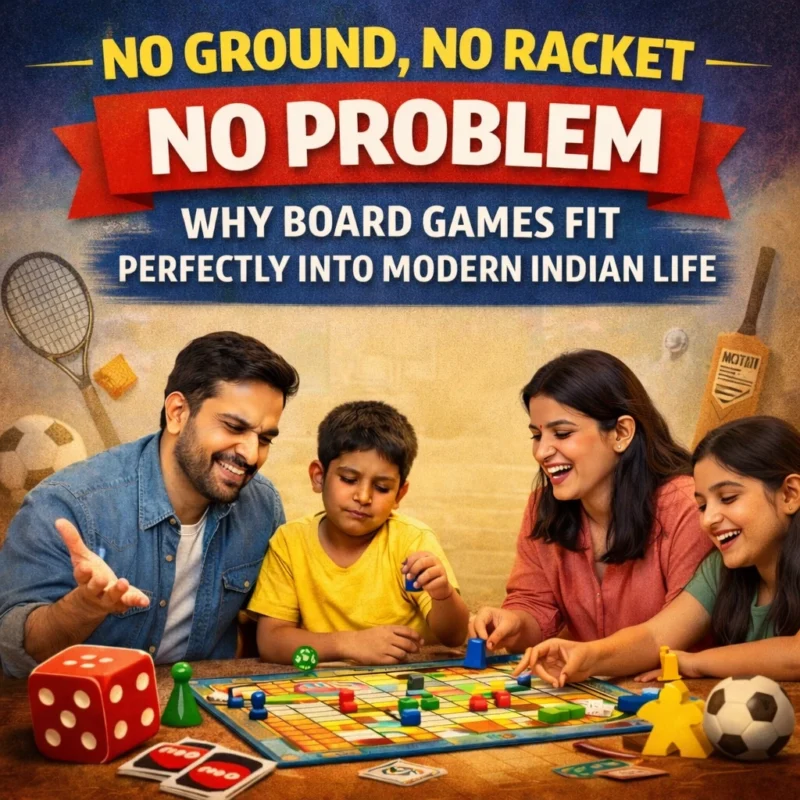
People want something simpler. Board games fit perfectly into this reality because they need:
- No ground
- No weather
- No fitness
- No special skills
Just a table… or honestly, even the floor.
“BUT AREN’T GAMES ALL ON MOBILE NOW?”
This is where many people get confused. Yes, digital games are everywhere. But board games are not trying to replace mobile games. They do something completely different.
Mobile games are:
- Fast
- Individual
- Often repetitive
Board games are:
- Slower
- Social
- Conversation-based
In a board game, you can’t mute people.
You can’t skip turns.
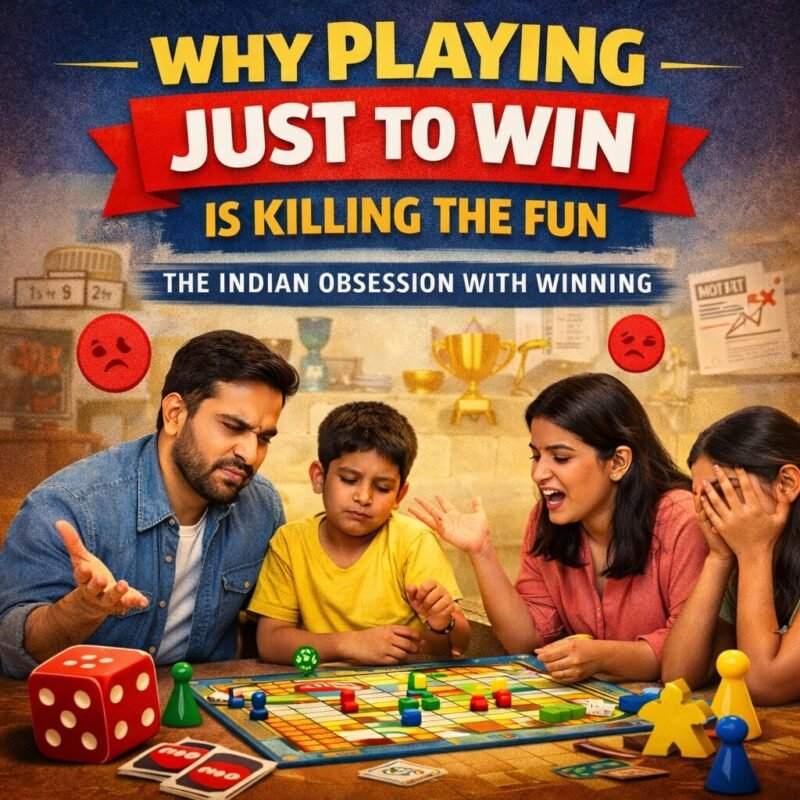
You can’t rage-quit silently.
You have to:
- Talk
- Negotiate
- Wait
- React to humans, not algorithms
That’s why families can watch TV together for three hours and still feel disconnected…
but play one 45-minute game and feel closer. Psychologists call this active social engagement.
We call it: “Finally, we spoke to each other.”
“Board Games Are Too Complicated, No?”
This is probably the biggest myth in India. Many people think board games mean:
- Long rules
- Confusing cards
- Someone explaining for 30 minutes
Reality check: Modern board games are designed in layers.
For example:
Games like UNO or Sequence can be learnt in 5 minutes.
Games like Ticket to Ride or Carcassonne are slightly deeper, but still family-friendly.
Then there are strategy games like Catan, where negotiation matters more than intelligence.
And here’s the important part:
You don’t need to know all games. You just need one good game that suits your family.
Just like you don’t watch all movies —
you find genres you enjoy. Board games work the same way.
What Board Games Do to Family Dynamics
This is where board games become really interesting. In Indian homes, hierarchy is fixed:
- Parents instruct
- Kids listen
- Elders decide
But board games don’t care about hierarchy. In a game:
- A 10-year-old can defeat a 40-year-old
- A grandmother can make the smartest move
- A teenager can teach the rules
And suddenly, something rare happens.
Parents listen.
Kids explain.
Everyone laughs at the same mistake.
Studies on child development show that rule-based play with adults improves:
- Confidence
- Communication
- Emotional control
Without lectures. Without motivation speeches. Just through play.
Is This Just Nostalgia?
Some people think: “Arre, this is just childhood nostalgia.”
Actually, no.
Globally, the board game industry is growing steadily and is valued at over 15 billion dollars.
And India, while still early, is showing clear signs:
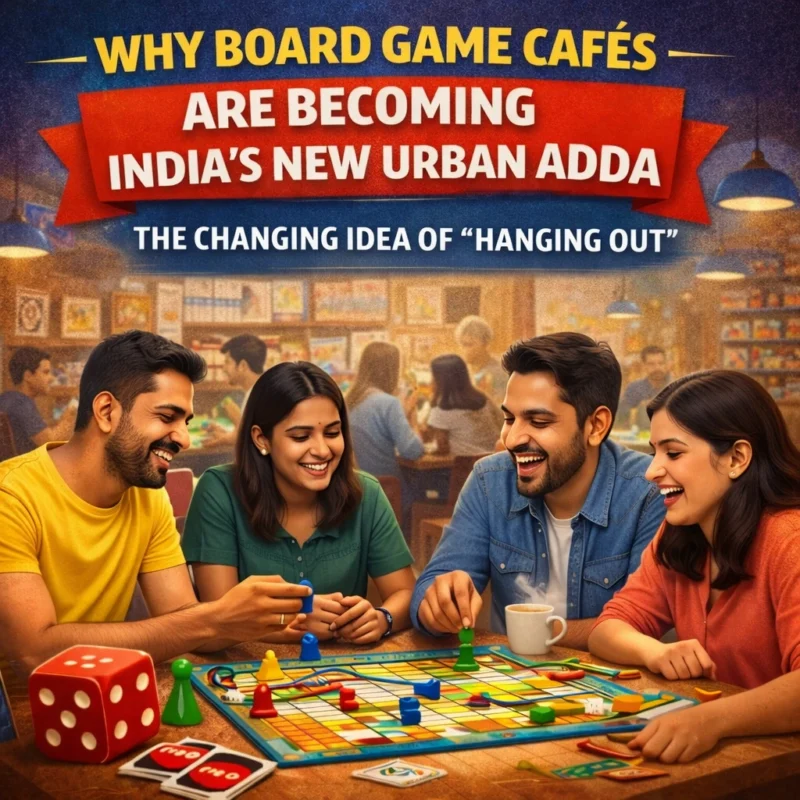
- Board game cafés in major cities
- Online communities
- Indian-designed games
- Parents actively searching for screen-free activities
This is not about going backwards.
This is about adapting entertainment to modern problems.
Just like cafés replaced old addas.
Just like gyms replaced playground workouts.
Board games are becoming a modern social tool.
Conclusion
Board games are not magical. They won’t fix families overnight.
But they do one very important thing. They make people sit down,
look at each other, and do something together.
In a world full of screens, that itself is powerful. And that’s why board games are not disappearing
They are quietly coming back.
— Ajay A.