Let’s get one thing out of the way.
There is no such thing as
“the best board game in the world.”
Just like there’s no single:
- Best movie
- Best book
- Best food
There are only right fits.
Some games work brilliantly with families.
Some shine with friends.
Some feel slow for youth,
some feel overwhelming for adults.
So instead of listing games one after another,
let’s do something more useful.
Let’s talk about five board games
that together cover:
- Family play
- Youth groups
- Adults after work
- Beginners and thinkers
And more importantly —
why they matter.
When You Want Everyone At The Table
Imagine this situation.
A 15-year-old.
A 35-year-old.
A 60-year-old.
Same table. Same game.
Very few games survive this test.
This is where UNO and Sequence quietly shine.
They are not deep strategy games.
They don’t make you feel clever.
But they do something more important:
They make everyone comfortable.
The rules are simple.
Luck balances skill.
Nobody feels stupid.
Nobody dominates.
Their weakness?
If you play them too often, they get repetitive.
But their strength is huge:
They are gateways.
For Indian homes especially,
these games build confidence:
“Okay, board games are not scary.”
When Youth Wants Something More
Now let’s move to a different mood.
College students.
Young professionals.
Friends meeting after work.
Here, pure luck feels boring.
Pure simplicity feels childish.
This is where Catan and Splendor come in.
Both games reward planning.
Both allow interaction.
But they feel very different.
Catan is loud.
Negotiation-heavy.
People talk, argue, bargain.
Its biggest advantage:
It teaches negotiation and trade psychology.
Its biggest drawback:
If one player falls behind early,
the game can feel frustrating.
Splendor, on the other hand, is quiet.
No negotiation.
Pure engine-building.
It’s elegant.
Short.
Clean.
Its strength is balance.
Its weakness is emotional distance —
less talking, more thinking.
Together, these two games show youth something important:
Board games can be social or cerebral.
You choose the mood.
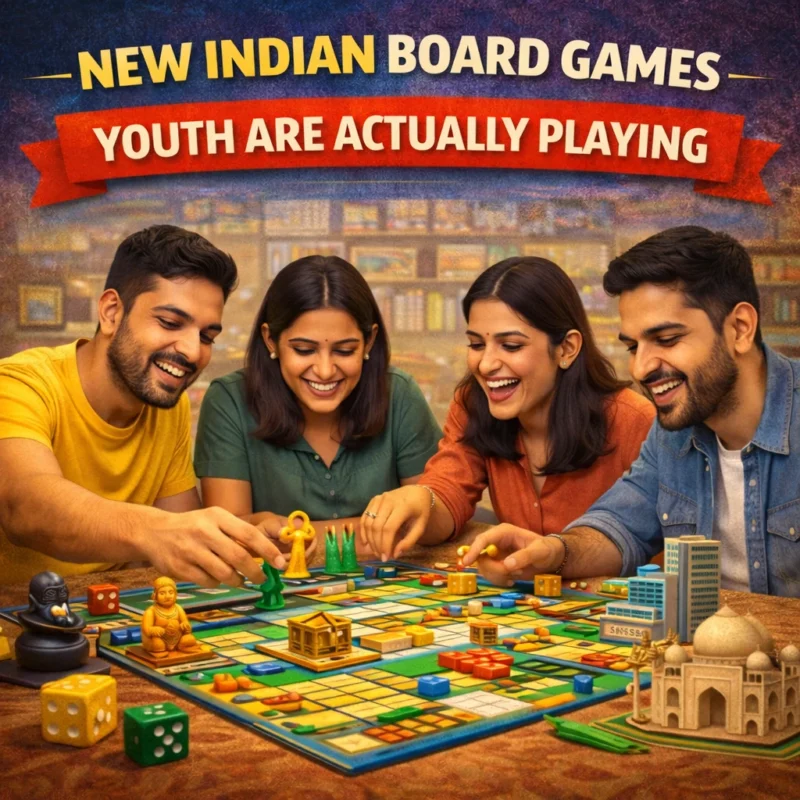
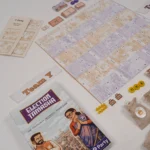
In INDIAN GAME 1: Shasn
Category: Politics, negotiation, strategy
Plays like: Catan + political simulation
Where it fits in Episode 6 logic:
- If Catan teaches negotiation in trade,
- Shasn teaches negotiation in power and ideology.
Why it matters for Indians:
- Familiar themes: elections, public opinion, ideology
- Makes abstract politics tangible
- Sparks discussion beyond the game
Limitations:
- Longer playtime
- Better for adults and older youth
- Needs patient players
Who should play it:
- College students
- Policy / politics curious adults
- Discussion-loving groups
When You Want Thinking Without Stress
Now let’s talk about adults.
After work.
After responsibilities.
After a long day.
Most adults don’t want:
- Fast reflexes
- Loud chaos
- Long explanations
They want engaging calm.
This is where Ticket to Ride quietly works magic.
The objective is simple:
Collect routes.
Connect cities.
But underneath that simplicity is:
- Long-term planning
- Risk management
- Timing
Its biggest strength:
It never overwhelms new players.
Its limitation:
Hardcore gamers may find it too gentle.
But for Indian families and mixed-age groups,
Ticket to Ride hits a sweet spot:
Thoughtful, but not exhausting.
In Indian Game 2: Kurukshetra: The Epic War Game
Category: Mythology, strategy
Plays like: Area control + tactical planning
Where it fits:
- If Ticket to Ride is calm strategy,
- Kurukshetra is dramatic strategy.
Why it matters:
- Uses Indian mythology without being childish
- Appeals strongly to Indian cultural memory
- Introduces strategic thinking through familiar stories
Limitations:
- Less replay variety than Euro-games
- Appeals more to theme-lovers than pure strategists
Who should play it:
- Families with teenagers
- Mythology enthusiasts
- Strategy beginners who want theme support
When You Want To Feel Something New
Now comes a very different kind of game.
Dixit.
Dixit is not about winning.
It’s not about strategy.
It’s not about planning.
It’s about how you think
and how others understand you.
People who love Dixit say:
“I never realised people see things so differently.”
People who dislike Dixit say:
“I don’t like abstract thinking.”
And that’s okay.
Dixit’s strength is emotional intelligence.
Its weakness is that it doesn’t appeal to everyone.
But in Indian families,
Dixit does something rare:
It bridges generations through stories.
That alone makes it special.
What These Games Collectively Teach
Now zoom out.
If you look at these five games together:
- UNO / Sequence
- Catan
- Splendor
- Ticket to Ride
- Dixit
You’ll notice something interesting.
They don’t compete with each other.
They complement each other.
Together, they cover:
- Luck and planning
- Negotiation and silence
- Emotion and logic
- Fast play and relaxed play
They also show something important to Indian audiences:
Board games are not a single genre.
They are a spectrum of experiences.
Why These Five Matter For India
India doesn’t need thousands of games.
It needs the right first few games.
These five matter because:
- They don’t need gaming background
- They don’t need perfect English
- They don’t need long attention spans
They fit:
- Indian homes
- Indian cafés
- Indian social habits
They help people move from:
“I don’t play board games”
to
“Which game should we play today?”
That shift is everything.
Not About Collecting Games
Board games are not about owning shelves of boxes.
They are about owning experiences.
If an Indian home has even two or three games
that people genuinely enjoy playing together,
that home already has something valuable.
Because play is not a luxury.
In today’s India,
play is becoming a necessity
Ajay A.