Let’s talk about space.
Not emotional space.
Not mental space.
Actual, physical space.
Most of us grew up hearing stories like:
“Humare time pe toh ground tha.”
“Shaam ko bahar nikal jaate the.”
“Poora mohalla khelta tha.”
Today, the reality is very different.
Children live in apartments.
Adults work long hours.
Traffic eats time.
Weather kills plans.
And slowly, play becomes something that needs:
– planning
– permission
– scheduling
Which usually means… it doesn’t happen.
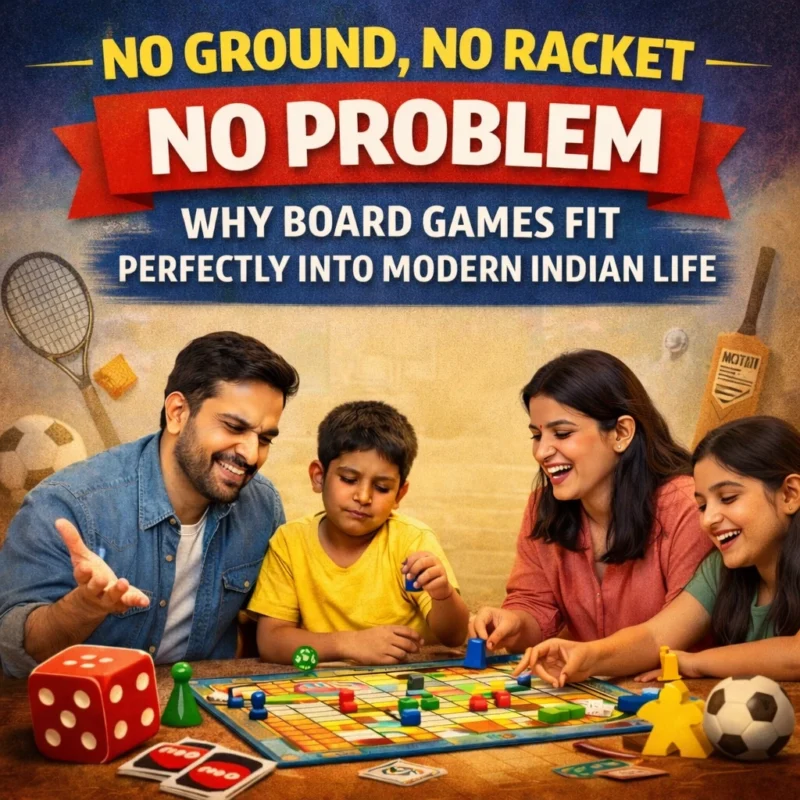
This is where board games quietly solve a very modern Indian problem.
WHY OUTDOOR PLAY IS HARDER TODAY
Outdoor games are not just about enthusiasm anymore.
They require infrastructure.
You need:
- A ground that is accessible
- Time that aligns for everyone
- Weather that cooperates
- Equipment that costs money
- Energy after work or school
In urban India, these conditions rarely come together.
This doesn’t mean people don’t want to play.
It means play has become inconvenient.
Board games remove most of these barriers.
They work:
- Indoors
- In small spaces
- At any time of day
- Across age groups
- Without physical strain
This is not a compromise.
It’s an adaptation.
“BUT BOARD GAMES ARE BORING, NO?”
This reaction is common.
And understandable.
For many Indians, “board games” still means:
- Old Ludo boards
- Missing dice
- Arguments over rules
But modern board games are a completely different category.
They are designed by:
- Game designers
- Behavioural experts
- Psychologists
- Educators
The goal is not to keep players busy.
The goal is to keep players engaged.
That’s why modern board games focus on:
- Decision-making
- Interaction
- Storytelling
- Problem-solving
You are not waiting for your turn.
You are watching, planning, reacting.
DIFFERENT GAMES FOR DIFFERENT LIVES
One reason board games work well today
is because they come in formats that suit modern schedules.
Let’s break this down.
Short Games (10–20 minutes)
Perfect for weekdays.
Examples:
Medium Games (30–60 minutes)
Ideal for family evenings.
Examples:
- Ticket to Ride
- Splendor
- Carcassonne
Long Strategy Games (90+ minutes)
Weekend, hobby-level play.
Examples:
- Catan
- Terraforming Mars
- Power Grid
This flexibility matters.
You don’t need a “gaming lifestyle”.
You just need one free slot.
Also, many games scale well:
– 2 players
– 4 players
– sometimes even solo
That’s a big advantage in households with mixed availability.
WHY BOARD GAMES DON’T NEED “SKILLS”
Another big hesitation people have is:
“I’m not good at games.”
Here’s the truth.
Most board games don’t test:
- Physical ability
- Speed
- Memory
They test:
- Observation
- Choice
- Adaptation
And because outcomes depend on multiple decisions,
one bad move does not destroy the experience.
This makes board games welcoming to:
- First-time players
- Older adults
- Children
- People who normally avoid games
In fact, many modern games are deliberately designed so that:
- Beginners can still enjoy
- Experts don’t dominate
- Everyone feels involved
That’s why families often say:
“Arre, yeh toh surprisingly fun tha.”
SMALL SPACES, BIG EXPERIENCES
Here’s something interesting.
As Indian homes become smaller,
entertainment is becoming more compact.
Earlier:
- Large TVs
- Large speakers
- Large setups
Now:
Board games fit this trend perfectly.
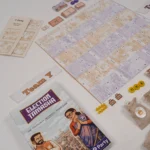
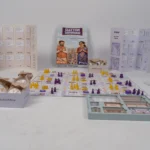
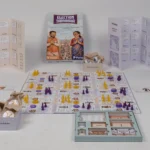
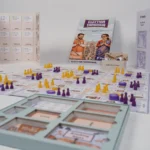
A small box can contain:
- One hour of engagement
- Multiple emotions
- Repeat value
And unlike digital content,
the experience changes depending on:
- Who is playing
- How they think
- What choices they make
Same game.
Different evening.
Different outcome.
A PRACTICAL FORM OF PLAY
Board games don’t demand ideal conditions.
They don’t ask for:
- Space
- Fitness
- Weather
- Expensive gear
They simply ask:
“Who’s sitting at the table?”
In a country where space is limited
and time is precious,
that simplicity is powerful.
And that’s why board games are not just surviving in modern India —
they are quietly fitting in.